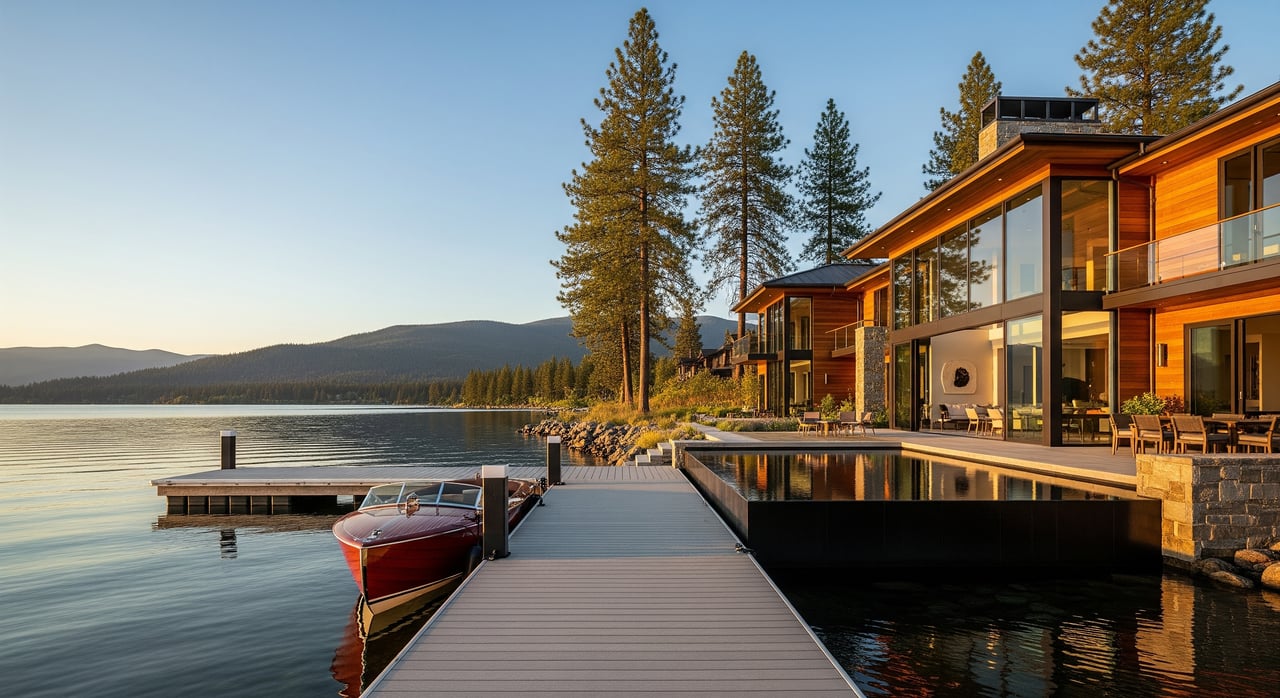
Eyeing a luxury or lakefront home on Coeur d’Alene Lake and wondering how to finance it? High‑value properties often need special financing, and the rules can feel opaque. You want a clear plan, realistic expectations, and a smooth path to closing. In this guide, you will learn how jumbo loans work in Kootenai County, what lenders expect for waterfront homes, and the steps to prepare a winning offer. Let’s dive in.
Jumbo loan basics in Kootenai County
A jumbo loan is any mortgage that exceeds the conforming loan limit set each year by the Federal Housing Finance Agency for your county. When your needed loan amount is above that local limit, the loan is considered jumbo and is not backed by Fannie Mae or Freddie Mac. That means lenders use their own guidelines and pricing.
What counts as jumbo here
To know if your Coeur d’Alene purchase requires jumbo financing, compare your target loan amount to the current FHFA conforming limit for Kootenai County. Your target loan amount is the purchase price minus your planned down payment. If that figure is above the county limit for the year you buy, you are in jumbo territory.
Quick way to check
Ask your lender to confirm the current FHFA limit for Kootenai County and to size your preapproval accordingly. Limits change each year, so do not rely on last year’s number. If you are close to the threshold, a slightly larger down payment may keep you under the line.
What lenders expect on jumbos
Jumbo loans involve more documentation and tighter credit standards than many conforming loans. When you prepare early, you reduce surprises during underwriting and keep your timeline on track.
Credit and income
Strong credit is important. Many jumbo programs favor mid‑700s FICO scores or higher, though options exist with compensating factors. Expect full documentation: W‑2s and tax returns, bank and asset statements, and proof of any other income.
Down payment and reserves
Jumbo down payments are often 10 to 30 percent. For unique luxury or waterfront properties, many lenders want 20 percent or more to manage risk. You may also need 6 to 12 months of reserves after closing, sometimes higher for large loans or complex properties.
Debt‑to‑income ratio
Many lenders prefer your total debt payments to stay under about 43 percent of your gross income. Strong assets or a larger down payment can help if you are close to the edge.
Loan types and rates
You will see both fixed‑rate and adjustable‑rate options. Pricing varies by market, credit strength, and lender type. Private or portfolio lenders may offer more flexible terms tailored to high‑value homes.
Mortgage insurance and structure
Traditional PMI is uncommon on jumbos. Lenders manage risk through higher down payments, pricing, or a second lien. Some programs advertise no PMI but may require stronger reserves.
Waterfront factors that affect financing
Waterfront homes around Coeur d’Alene are special, and lenders treat them that way. The features you love can add complexity for valuation, title, and insurance.
Appraisal and comparable sales
Lakefront comps can be limited. Appraisers must quantify the waterfront premium for view, frontage, dock rights, and usable shoreline. Lenders often require appraisers with waterfront experience and may order a review for uniquely high‑end homes.
Title, access, and water rights
Your title work should confirm riparian or littoral rights, shared dock agreements, and any recorded easements. Public access or park adjacency can affect use and value. A current title commitment and a survey help surface issues early.
Permits, docks, and shoreline rules
Dock installations, shoreline walls, and vegetation changes often need permits from city or county planning departments, and sometimes state agencies. Setbacks, buffers, and runoff controls can limit future projects. Confirm permit history and compliance before you waive contingencies.
Environmental and geotechnical
Erosion, bluff stability, and seasonal high‑water conditions can impact value and insurability. If the site shows slope or shoreline concerns, budget time for a geotechnical opinion. Underground tanks or past industrial uses nearby may trigger environmental review.
Septic, well, and utilities
Many waterfront homes rely on septic and well systems. Lenders usually require recent inspections, pumping records, water quality tests, and proof of permits. Confirm winter road access and utility reliability, since access can affect underwriting and value.
Flood risk and insurance
FEMA flood maps determine if flood insurance is mandatory for loans on properties within a Special Flood Hazard Area. Even outside mapped zones, lakeside homes can carry flood exposure. Get an elevation certificate and insurance quotes early so your lender can underwrite with accurate premiums.
Property taxes and assessments
Waterfront assessments are often higher. Review Kootenai County Assessor data and check for special levies or district assessments that affect your budget.
HOA and rental rules
Some communities limit short‑term rentals, dock use, or exterior changes. If you plan to rent, know that lenders often treat investment or short‑term rental properties differently, with higher reserves or different income documentation.
Lender options and smart strategies
Not all jumbo lenders view waterfront risk the same way. Choosing the right partner can mean better terms and fewer roadblocks.
Lender types to consider
- National wholesale or correspondent lenders with competitive jumbo pricing and standard overlays.
- Regional and local banks or credit unions that understand Coeur d’Alene lakefront features and may keep loans in portfolio.
- Private banks and wealth managers that tailor terms for large deposits or complex income.
- Mortgage brokers who can shop multiple jumbo products and find flexible guidelines for unique properties.
Strategies used by waterfront buyers
- Increase your down payment to reduce loan‑to‑value and improve pricing.
- Use a local portfolio lender for a one‑of‑a‑kind property.
- Consider a bridge loan if you are selling a high‑value home to buy the new one.
- Pair a primary loan with a HELOC on another property to reach the total budget.
- Make a strong offer with documented reserves and specialty inspection plans.
Your step‑by‑step timeline
Pre‑offer (2 to 6 weeks)
- Get preapproved with a lender experienced in jumbo waterfront loans.
- Confirm expected down payment, reserves, and appraisal expectations in writing.
- Order a preliminary flood determination and review FEMA mapping.
- Start a title search and review easements and CCRs with a local attorney.
- Gather proof of funds for down payment and reserves.
Offer (1 to 2 weeks)
- Include a financing contingency and a realistic appraisal timeline.
- Allow a longer inspection period for septic, well, dock, geotechnical, and environmental checks.
Due diligence and underwriting (3 to 6 weeks)
- Schedule an appraiser with lakefront experience.
- Complete septic, well, and dock inspections; order geotechnical if needed.
- Obtain a flood elevation certificate and insurance quotes.
- Provide any additional documentation for assets, reserves, and funds to close.
Closing (1 to 2 weeks after clear to close)
- Clear title exceptions and secure endorsements for waterfront features as needed.
- Bind homeowner, flood, and liability policies per lender conditions.
- Coordinate wires and closing logistics for large transfers.
Local diligence checklist
- Verify the current FHFA conforming loan limit for Kootenai County.
- Pull Assessor records for current assessed value and tax history.
- Confirm dock permits, shoreline approvals, and past building permits with local planning offices.
- Review recorded easements, access agreements, and any shared dock maintenance terms.
- Line up septic and well inspections and confirm permits match installed systems.
- Obtain flood mapping, elevation data, and insurance quotes early.
- Engage local title, appraisal, and inspection pros who know Coeur d’Alene waterfront.
VA buyers on the lake
VA removed its fixed loan limit for eligible veterans with full entitlement, but lender overlays can still shape approval on high‑value waterfront homes. If you plan to use VA financing, shop multiple VA‑approved lenders and be ready to document strong reserves, stable income, and property‑specific reports.
Make your offer stand out
- Present a complete preapproval from a lender familiar with waterfront jumbos.
- Show verified cash reserves and a clear plan for specialty inspections.
- Right‑size contingencies to allow appraisals and reports without unnecessary delay.
- Work with a local real estate advisor who can anticipate permitting, title, and appraisal questions before they become issues.
Buying a Coeur d’Alene lakefront or luxury home is about lifestyle and long‑term plans, not just loan size. With the right preparation and a team that knows the shoreline, you can secure the financing and the property that fit your goals. If you want a local, concierge‑level guide for waterfront and estate properties, connect with Cindy Perry for tailored advice and a smooth path to closing.
FAQs
What is a jumbo loan in Kootenai County?
- A jumbo is any mortgage that exceeds the FHFA conforming loan limit for the county and year; if your needed loan amount is above that limit, you will use jumbo financing.
How do I confirm if my loan is jumbo?
- Compare your target loan amount to the current FHFA limit for Kootenai County; your lender can verify the latest number and size your preapproval.
Are jumbo rates higher than conforming?
- It depends on market conditions and your profile; jumbo rates can be similar to or slightly higher than conforming, and lender type and down payment matter.
Do lakefront features affect the appraisal?
- Yes; frontage, views, dock rights, and shoreline condition create valuation complexity, so lenders often require appraisers with waterfront experience.
What inspections are critical for waterfront homes?
- Septic and well evaluations, dock and boathouse structural checks, shoreline or erosion assessment, and geotechnical review where slopes or bluffs exist.
Will I need flood insurance on the lake?
- If structures are in a FEMA Special Flood Hazard Area and you use a loan, flood insurance is required; many buyers consider flood coverage even outside mapped zones.
Can I use a VA loan for a high‑value lake home?
- VA entitlement rules allow high loan amounts for eligible veterans, but lender overlays and property complexity can affect approval; shop more than one VA lender.