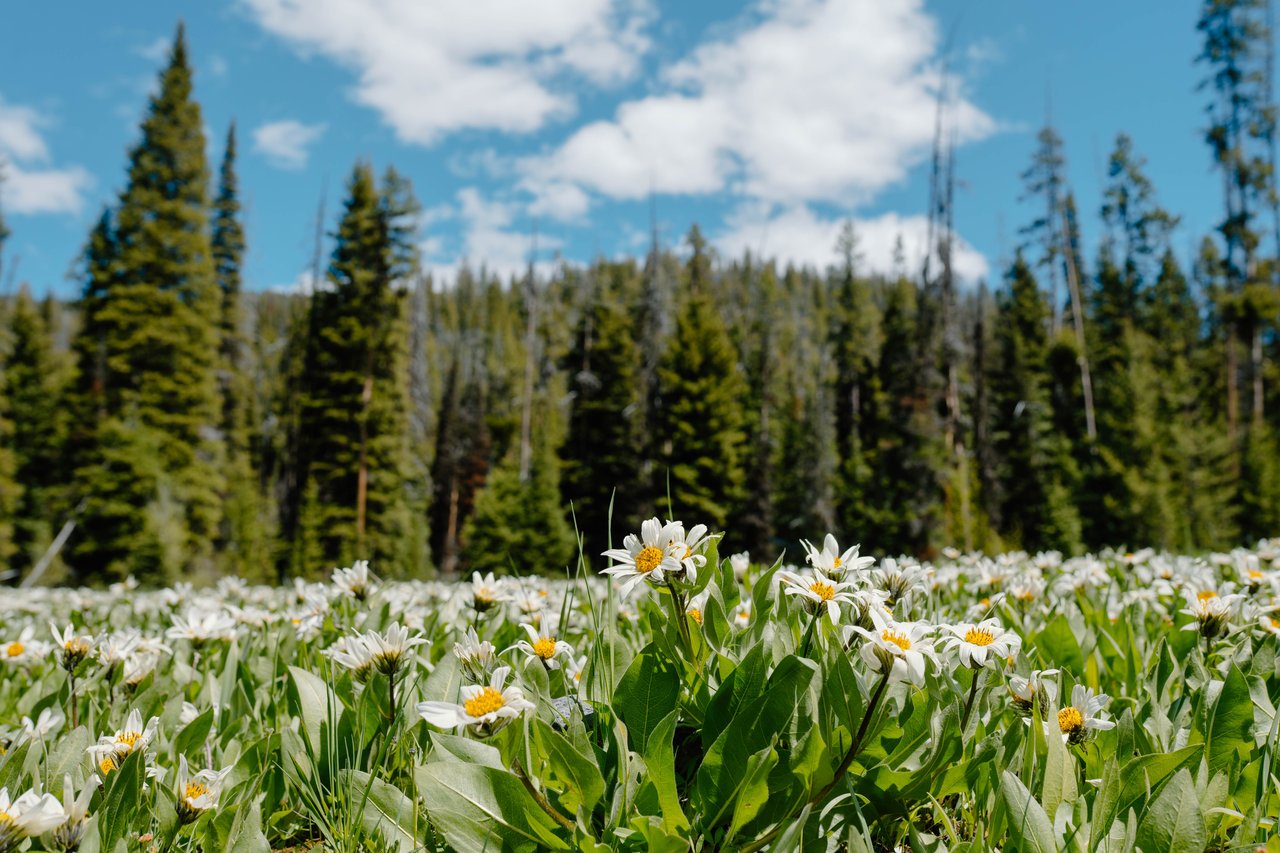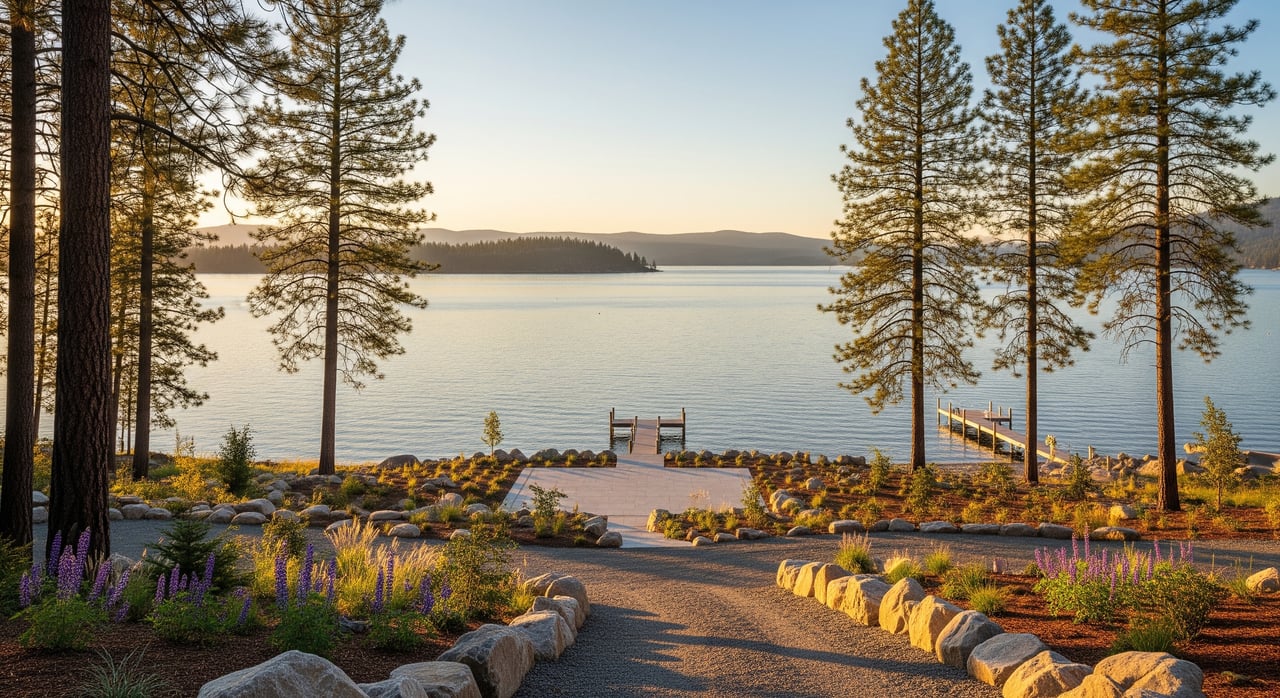
Picture this: morning sun on the pines, space for a shop or barn, and neighbors far enough away that privacy feels natural. If you’re drawn to that lifestyle around Coeur d’Alene, an estate lot might be the right path. Still, buying land feels different than buying an existing home, and the details can get complex fast. In this guide, you’ll learn what “estate lot” really means here, how utilities and permits work, what CC&Rs allow, and how to tour and vet parcels with confidence. Let’s dive in.
What “estate lot” means locally
In the Coeur d’Alene area, “estate lot” is a marketing term rather than a zoning category. It generally describes a larger single-family parcel intended for a substantial home with private outdoor space and more separation from neighbors. You’ll see these lots inside the city’s edge, in nearby subdivisions, and across rural parts of Kootenai County.
Buyers typically expect more privacy, room for accessory buildings, and space for amenities like a pool, riding arena, or extensive landscaping. Sellers often highlight views, mature trees, and natural topography. Because “estate” isn’t a legal designation, you should always verify zoning, minimum lot size, and permitted uses for any parcel through the city or county.
Typical sizes and settings
Lot sizes you’ll see
Estate lots commonly range from about 1 to 5 acres, with some rural parcels exceeding 5 acres. Closer-in neighborhoods sometimes offer “estate-style” lots around 0.5 to 1 acre. Exact acreage varies by subdivision and zoning, so confirm with the recorded plat and county parcel data.
Common settings
- Suburban edge subdivisions: Often on paved roads with some utility connections and an HOA or architectural review.
- Semi-rural parcels: Near county roads with private driveways and more flexible uses, but you may have longer utility runs and shared access to maintain.
- Rural parcels: Forested or agricultural land with potential slopes, wells and septic systems, and greater wildfire and access considerations.
Topography and views
Hillsides can deliver lake, valley, or hill views but usually increase site work costs. You may need grading, retaining walls, engineered foundations, or stormwater controls. Flat to gently sloped parcels tend to simplify construction and reduce upfront costs.
Vegetation and wildfire risk
Many estate lots include significant tree cover and sit in the wildland-urban interface. Plan for defensible space, fuel reduction, and possibly wildfire-resistant construction. These choices can impact budgets and timelines, and they may affect insurance requirements.
Access and roads
Confirm whether access is via a public, county-maintained road or a private road or driveway. Private access typically involves recorded maintenance agreements and shared responsibilities. Access width, slope, and surfacing can influence permitting and everyday use, especially during winter.
Utilities and permits basics
Utilities and approvals are the backbone of buildability. Each service has its own process and costs, and availability varies widely by location.
Water options
- Municipal water: Portions of the city and some nearby developments provide municipal or district water. Connection often simplifies plumbing, financing, and permitting.
- Private well: Many rural parcels rely on drilled wells. You will need a permitted well with a usable yield, plus verification of water rights and well logs. Availability and water rights can be limiting, so confirm early with the Idaho Department of Water Resources.
Wastewater choices
- Municipal sewer: Where available, this is straightforward and typically preferred by lenders.
- On-site septic: Outside sewer service areas, you’ll need a soil evaluation and septic permit. The Panhandle Health District oversees percolation testing and approvals. Soil type, groundwater depth, slope, and setbacks all matter.
Power, gas, and internet
Power lines may already cross or run near many parcels, but extending service to a remote lot can be costly. Avista Utilities is a major provider in the region, though you should verify your provider, line-extension policies, and costs. Natural gas is not universal; many estate homes use propane or electric heat. Broadband ranges from cable or fiber in closer-in areas to DSL, fixed wireless, or satellite on rural sites. Confirm both internet options and cellular signal strength at the property.
Stormwater and drainage
Larger lots still need stormwater management. On slopes or where neighborhoods have shared drainage facilities or easements, you may need engineered plans and specific site work to control runoff.
Easements and restrictions
Easements for utilities or access can limit where you place a home, driveway, or shop. Verify recorded access easements, widths, and maintenance obligations. Also check for mineral, timber, or conservation easements that could limit use. A preliminary title report is essential before moving forward.
Zoning and building permits
Inside city limits, the City of Coeur d’Alene sets zoning, setbacks, coverage limits, and the building permit process. In unincorporated areas, Kootenai County’s Planning and Building Department regulates zoning and permits. Expect a sequence that includes zoning and utility verification, a boundary survey, septic feasibility or sewer confirmation, well investigation if needed, site plans, and then building permits for foundation, framing, mechanical, and final. Complex sites may require engineered plans and fire code compliance.
CC&Rs, HOAs, and architectural review
Many estate subdivisions record Covenants, Conditions & Restrictions with an HOA or architectural review board. These rules might set minimum home size, exterior materials, roof pitch, colors, driveway and fencing styles, landscaping standards, and restrictions on livestock or accessory buildings.
These covenants can add time for review and approvals and may influence costs. Read the documents carefully. Look for guidance on rentals, RV or boat storage, shop sizes, and animal allowances. Understanding these rules upfront helps you align your design and timeline.
Lifestyle and value tradeoffs
Buying an estate lot is a lifestyle decision as much as a financial one. Consider these tradeoffs as you narrow your search:
- Privacy and space vs. maintenance: Larger parcels offer elbow room and more design freedom, but you will likely manage more landscaping, driveway upkeep, and snow removal.
- Proximity to services vs. rural quiet: Closer-in lots reduce commute time and often provide municipal utilities. Rural lots deliver seclusion but typically involve longer drives and fewer immediate services.
- Upfront site costs vs. long-term value: Slope, rocky soils, and long utility runs raise development costs. That impacts total project feasibility and future resale.
- HOA control vs. preserved standards: HOAs can increase recurring costs and limit what you build. They also help maintain a consistent look and feel, which can support neighborhood values.
- Fire risk and insurance: Forested or interface areas may require mitigation work and sometimes higher premiums. Plan for defensible space and check insurance availability early.
Resale considerations
Parcels with municipal water and sewer, paved public access, simpler topography, and fewer restrictive covenants are often easier to finance and resell. Properties that are remote, have complicated access, lack utilities, or include highly specialized improvements can narrow the buyer pool.
Financing realities
Buying raw or lightly developed land often requires a lot loan or higher down payment. If you plan to build, construction loans are common and have different documentation and qualification standards than a standard mortgage. Lenders typically prefer clear access and reliable water and wastewater solutions. Some specialized programs may be available in qualifying rural areas depending on exact location and eligibility maps.
Touring checklist
Use this simple, field-ready checklist to compare lots with confidence.
Before you tour
- Request the parcel number, recorded plat, CC&Rs, and current zoning designation.
- Map the service providers you’ll need to confirm: water district or well feasibility, sewer or septic, electric, gas or propane, and internet.
- Define non-negotiables like minimum acreage, commute time, and allowed accessory uses.
On-site essentials
- Boundaries: Bring the plat map and look for markers. Note any encroachments or fence lines that seem off.
- Access: Confirm public vs. private road, surface type, grade, and who maintains it.
- Utilities: Look for a water meter, nearby hydrants or mains, power poles or transformers, and any visible septic infrastructure or propane tanks.
- Connectivity: Test cellular signal and ask about internet providers that actively serve the area.
- Terrain: Walk the slope, drainage paths, and tree cover. Note areas that may need clearing or grading and any potential wildfire risks.
- Surroundings: Observe neighboring uses, potential future development sites, and recorded easements that could affect privacy.
Technical due diligence
- Boundary survey: Order a new survey if the existing one is outdated.
- Septic feasibility: Schedule percolation testing and obtain approvals from the Panhandle Health District if sewer is not available.
- Well verification: Review well logs or consult on drilling feasibility with the Idaho Department of Water Resources.
- Utility bids: Get line-extension quotes from electric, water, and internet providers. Price buried vs. overhead power and transformer placement.
- Title review: Order a title report to confirm easements, CC&Rs, mineral rights, and any recorded restrictions.
- HOA review: Read architectural guidelines and rules for shop size, fencing, animals, rentals, and exterior standards.
- Site work estimate: Ask a local builder or civil engineer for a preliminary budget covering grading, retaining walls, driveway, and utility trenching.
- Insurance check: Confirm coverage options and wildfire mitigation requirements.
Next steps with a local expert
The best estate-lot purchases start with clear criteria and a team that knows the land. Define your must-haves, then tour a mix of close-in subdivisions and semi-rural or rural parcels to compare access, utilities, and site complexity. While you explore, involve a local builder or engineer early so you can price site work and timeline impacts alongside the lot price.
If you want a sounding board from a North Idaho specialist in acreage, equestrian properties, and estate-lot communities, reach out to Cindy Perry. You’ll get patient, concierge-level guidance on parcels, CC&Rs, utilities, and due diligence, plus neighborhood-level context to align your land and lifestyle.
FAQs
What is an estate lot in Coeur d'Alene?
- It is a larger single-family parcel marketed for privacy, space, and amenities, but the term is not a zoning category, so you must verify zoning and permitted uses.
How big are estate lots around Coeur d'Alene?
- Many range from about 1 to 5 acres, with some larger rural parcels and smaller estate-style lots near 0.5 to 1 acre in certain subdivisions.
Do I need a well or can I get city water?
- It depends on location. Some areas have municipal or district water; many rural parcels use drilled wells, which require permits, usable yield, and verified water rights.
How are septic systems approved?
- Outside sewer service, the Panhandle Health District oversees soil evaluation and percolation tests that drive septic design and permitting.
What permits will I need to build?
- Expect zoning verification, septic or sewer confirmation, well verification if applicable, site plans, and building permits for foundation, framing, mechanical, and final, plus any fire code or engineered requirements.
Can I keep horses or build a shop on an estate lot?
- Possibly, but it depends on zoning and recorded CC&Rs. Review both carefully for livestock rules, accessory building size, and placement standards.
Is land and construction financing different from a mortgage?
- Yes. Lot loans and construction loans often require higher down payments, more documentation, and clear access and utility solutions to satisfy lenders.
What affects resale value for estate lots?
- Easier resale typically involves public paved access, municipal water and sewer, simpler topography, and fewer restrictive covenants, while remote sites with complex access or limited utilities can narrow the buyer pool.