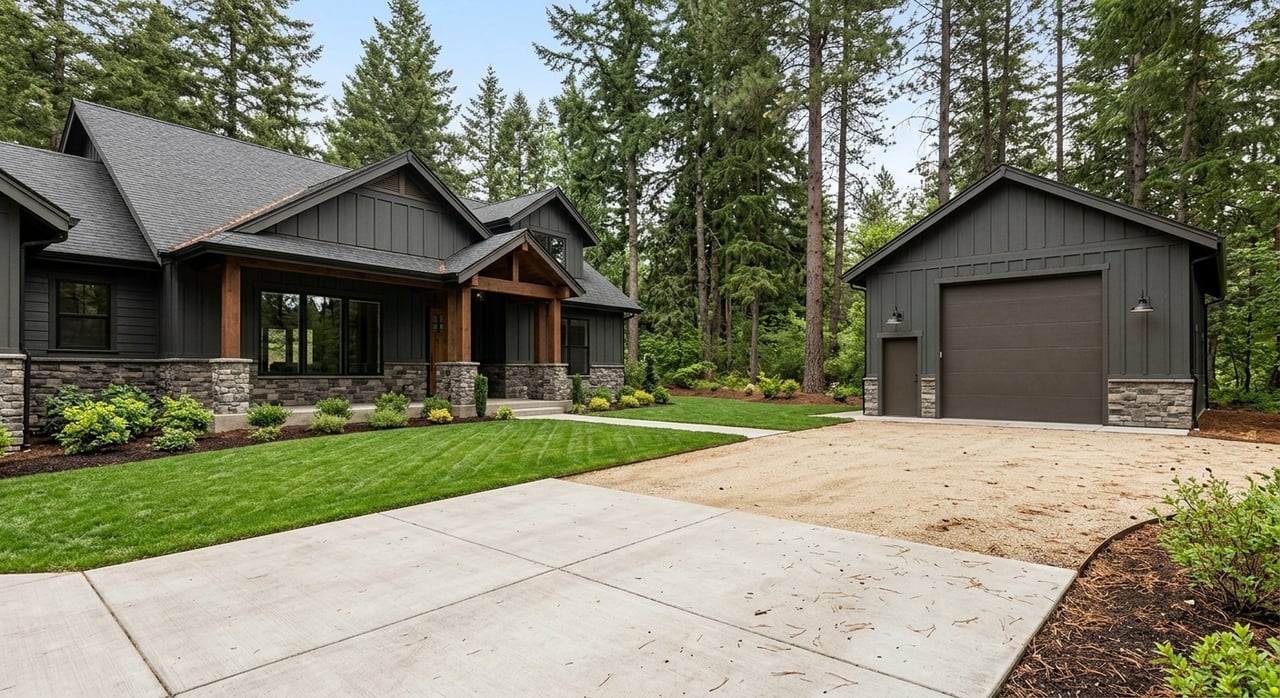
Dreaming of an Athol property with room for toys, tools, tractors, or an RV? You are not alone. Acreage with a shop is a popular goal in North Idaho, but the details behind that dream can get complicated fast. If you are shopping for land and a shop in Athol, the smartest move is to look beyond the building itself and understand access, zoning, permits, and utility limits before you buy. Let’s dive in.
Why Athol shop properties need extra homework
A shop can add real flexibility to an acreage property. You may want space for equipment, hobbies, vehicle storage, or a future barn-style workspace. But in Athol, what you can do with a parcel depends first on where the parcel is located.
Some properties fall inside the City of Athol, while others are in unincorporated Kootenai County. That matters because the city and county have different permit processes, standards, and review requirements. Before you assume an existing shop can be expanded or a new one can be built, confirm which jurisdiction controls the property.
Start with city or county rules
If the parcel is in unincorporated Kootenai County, the county Building Division has jurisdiction over structures there. If the parcel is inside Athol city limits, the City of Athol uses its own building-location and land-use permit process. This is the first question to answer because nearly every next step flows from it.
For example, county agricultural parcels have specific standards for accessory buildings. On agricultural parcels of 5 acres or more with at least 75 feet of frontage, barns, stables, riding arenas, and accessory shop buildings under 2,500 square feet may be allowed, subject to zoning requirements. In that same county Agricultural Zone, accessory buildings and personal storage buildings generally have 25-foot front setbacks, 10-foot side setbacks, and 15-foot rear setbacks.
Inside the City of Athol, smaller structures are treated differently in some cases. A non-habitable structure under 200 square feet may be exempt from the building-location permit, but that does not remove setback requirements. In other words, a small shed may avoid one layer of review, but it still has to be placed correctly on the lot.
Zoning can shape what fits
When buyers picture a shop, they often focus on square footage first. In reality, zoning can be just as important as the building size. Setbacks, height limits, and use restrictions can all affect whether a shop, barn, or RV bay actually works on the parcel you want.
In some county residential zones, accessory garages, tool sheds, storage sheds, and shop buildings tied to a residential use are capped at 20 feet in height. That can be a major factor if you want tall RV doors, a lift, or extra-clearance storage. A shop that looks perfect on paper may not fit local height rules.
If your plan is to build the shop before the house, verify zoning even more carefully. In at least some Kootenai County zoning categories, building before the primary use exists can require a conditional use permit. That is the kind of issue you want to uncover early, not after closing.
Shop use matters, not just shop size
Not all shops are treated the same. A simple storage building is one thing, while a shop tied to business activity can trigger a different review path. If you are buying acreage for personal storage, hobbies, or equipment, that may be straightforward compared with a property meant to support a home occupation.
In Kootenai County’s Agricultural Zone, home occupation is listed as a special use rather than an automatic permitted use. If you plan to use the shop for more than storage or personal use, ask questions early about whether separate review may be needed. The intended use can be just as important as the footprint.
Access and driveway design are a big deal
One of the most overlooked parts of buying acreage with a shop is access. A great building is less useful if your driveway is too narrow, too steep, or too awkward for trailers, RVs, and larger vehicles. In North Idaho, access standards also connect directly to fire safety.
Kootenai County Fire & Rescue says access roads to residential properties should provide at least 20 feet of unobstructed width and 13 feet 6 inches of vertical clearance. Driveways should be at least 12 feet wide, and driveways longer than 150 feet need turnarounds. The department also says driveways should not exceed a 10 percent grade unless approved, and each site is evaluated on its own merit.
County code adds another layer by requiring driveways and common driveways to meet the current International Fire Code, with the fire protection district making the compliance determination. That means width, turning radius, and maneuvering room are not just convenience issues. They are due-diligence items that can affect whether the site works for your plans.
If you expect to pull a horse trailer, utility trailer, or RV into the shop, think through the full path of travel. Consider snow storage in winter, backing angles, and whether there is enough room to turn around without constant frustration. A usable site layout can matter as much as the shop itself.
Athol city access rules have their own details
If the parcel is in the City of Athol, driveway design still deserves close review. Athol’s road standards say driveway location and number must be approved by the city engineer. Driveways generally must be at least 5 feet from the side property line and preserve a 20-foot clear-view triangle.
Athol also sets typical residential driveway widths at about 12 to 30 feet. Shared driveways require a 30-foot common access easement and, if they are not looped, they must meet fire-department turnaround criteria. These details can affect whether an existing driveway layout is acceptable for your intended shop use.
If a property needs a new driveway, grading, excavation, road work, or a new parking area, Athol requires a site-disturbance permit. The application calls for a scaled drawing showing property lines, easements, septic and utility locations, planned structures, and driveway location. If work extends into the public right-of-way, a separate encroachment permit is used.
Most true shops are not permit-free
Buyers sometimes hear that small accessory buildings can be permit-exempt and assume the same applies to a full-size shop. Usually, that is not the case. In Kootenai County, one-story detached accessory structures under 200 square feet are permit-exempt, but that exemption does not override zoning or placement rules.
The county Building Division specifically issues permits for residential storage buildings over 200 square feet, garages, pole barns, and similar structures. So if you are looking at a real shop, large garage, or RV bay, you should expect permitting to be part of the process. County agricultural buildings may be exempt from building codes, but they still remain subject to zoning placement rules.
Inside Athol, most structures require a building-location or land-use permit before construction. The city’s plot plan requirements are detailed and include lot lines, easements, septic tanks and drainfields, water and electrical lines, existing and planned structures, and distances to property lines and between structures. That makes pre-purchase review especially important if you hope to add onto what is already there.
North Idaho weather affects shop design
In this area, a shop is not just about walls and a roof. It also has to stand up to local conditions. Kootenai County lists a 104 psf ground snow load, 90 mph wind design, a 24-inch frost depth, and required ice underlayment.
These standards matter if you are evaluating a large-span shop, a tall door opening, or a roof designed to carry heavy snow. If you are planning future construction, these design numbers help explain why structural planning in North Idaho can be more involved than buyers expect. It is another reason to review existing improvements carefully and verify what may be required for expansion.
Septic, water, and power deserve a close look
A shop can create utility questions fast, especially if you want a bathroom, heated workspace, or room for future expansion. Kootenai County directs septic-related and water-quality questions to Panhandle Health District, while state inspectors handle plumbing and electrical inspections. For city properties, Athol notes that Panhandle Health District will not issue subsurface sewage permits until the city has reviewed and approved the application and dwelling-equivalent allotment.
For buyers, the takeaway is simple. Do not assume the current septic system, water routing, or electrical service will support your plans. If your vision includes more than cold storage, verify capacity and approval paths before you remove contingencies.
Title documents can limit shop plans too
Even if zoning allows a shop, private restrictions may still shape what you can do. Recorded title documents, subdivision materials, and CC&Rs can include building-area limits, setbacks that are greater than zoning, drainage easements, and other placement restrictions. HOA documents can also add separate standards.
Kootenai County recording guidance notes that restrictive covenants can appear in CC&Rs or deeds, and a full title report can help identify them. This is especially important on acreage in subdivisions or planned developments. A parcel can look wide open on a map but still carry recorded limits that affect where and how you build.
A smart buyer checklist for Athol acreage
Before you commit to an Athol property with a shop, keep this short list in mind:
- Confirm whether the parcel is in the City of Athol or unincorporated Kootenai County.
- Pull the zoning designation and review setbacks and height limits.
- Measure driveway width, grade, turnaround space, and trailer or RV maneuvering area.
- Verify whether the property or your plans require a building permit, site-disturbance permit, or both.
- Review septic approvals, utility capacity, and electrical routing if the shop will need more than basic storage use.
- Read title documents, subdivision records, and any CC&Rs before removing contingencies.
- If the parcel is in the county, direct site-access questions to the highway district and fire district with jurisdiction.
Why local guidance helps on acreage deals
Acreage with a shop can be an excellent fit for the North Idaho lifestyle. It can also involve more moving parts than a standard neighborhood home. Jurisdiction, zoning, access, structure design, permits, and utilities all have to line up for the property to work the way you want.
That is why careful due diligence matters so much in Athol. When you understand the parcel first and the shop second, you can shop with more confidence and avoid costly surprises later.
If you are looking at acreage in Athol and want a local, steady guide who understands lifestyle properties, Cindy can help you sort through the details that matter most. Connect with Cindy Perry for knowledgeable support as you search.
FAQs
What should buyers verify first on an Athol acreage property with a shop?
- Confirm whether the parcel is inside the City of Athol or in unincorporated Kootenai County, because permit rules and review processes differ.
What driveway standards matter for Athol or Kootenai County shop properties?
- Buyers should review driveway width, grade, vertical clearance, turnaround space, and trailer or RV maneuvering area, since fire-access standards can affect usability and compliance.
Do Athol acreage shops usually need permits?
- Most full-size shops, garages, pole barns, and RV bays are not treated as permit-free projects, even though some very small accessory structures may be exempt from certain permit requirements.
Can zoning affect the size or height of a shop in Kootenai County?
- Yes. Setbacks, zoning placement rules, and in some areas height caps for accessory buildings can limit what type of shop or RV bay will fit.
Why should buyers review septic and utility capacity for an Athol shop property?
- If a shop may include a bathroom, heated workspace, or future expansion, buyers should verify septic approvals, water-service routing, and electrical capacity before closing.
Can CC&Rs or title documents restrict shop use on Athol acreage?
- Yes. Recorded CC&Rs, deeds, subdivision plans, and HOA materials can impose building-area limits, easements, or setbacks beyond basic zoning rules.